Buying Dexter Beef
Grass-fed Irish Dexter from Apafia Farm — how we raise them, why the beef tastes the way it does, and how to reserve a side when one is open.
Dexter beef is known for tender texture, nice marbling, and real beef flavor. Here are a few outside articles and taste results worth reading:
How we raise them
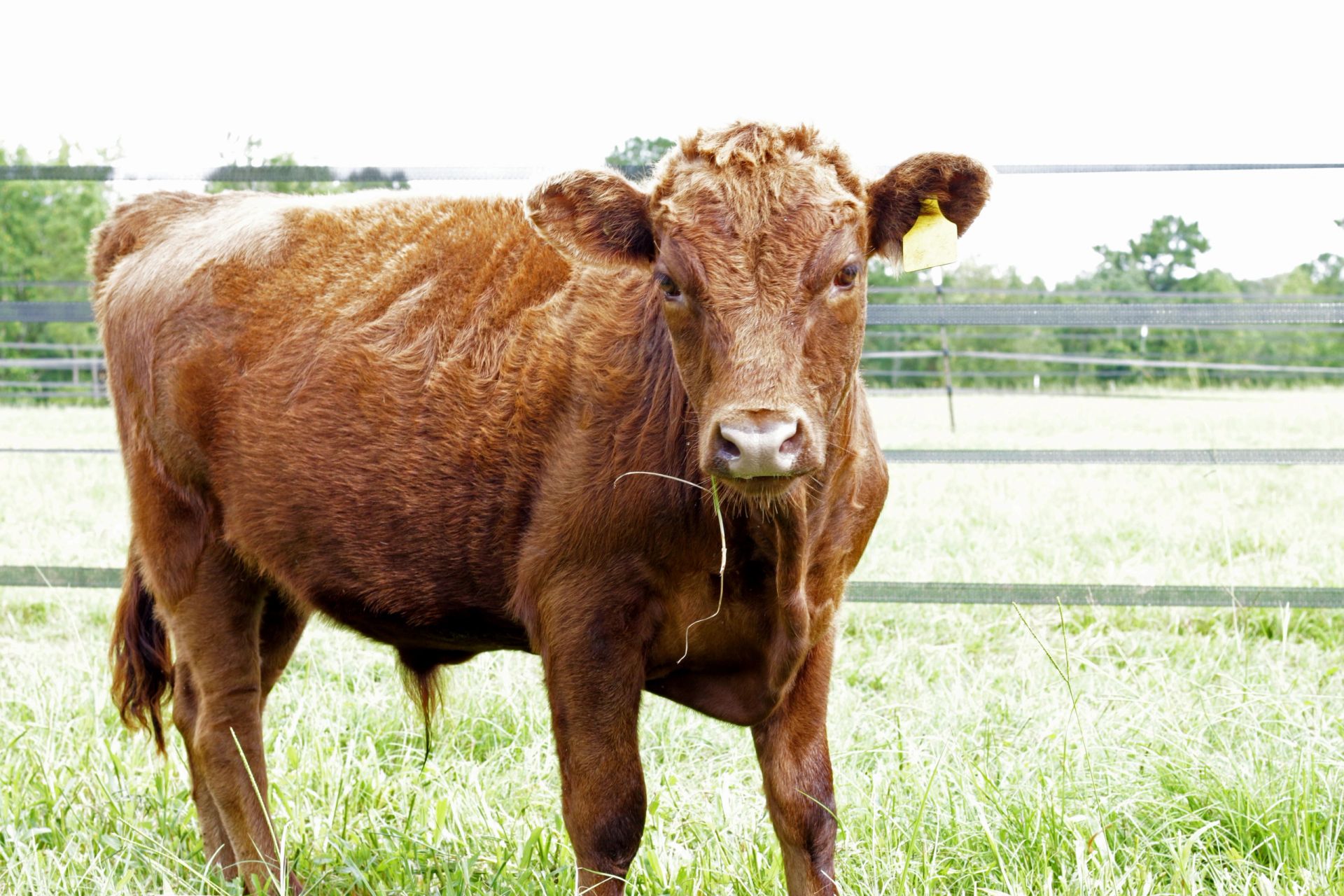
Brown Dexters on green grass. This is how they live.
We raise grass-fed beef that is so much better than the store. It is not just what they eat.
They get lots of open pasture, shade trees and shelters, and clean fresh water. Holly keeps the troughs so clean you would be amazed.
We have worked with AGW and University of Georgia experts so we feed the right amount and types of grass. In winter they still graze winter grasses, and we supplement with hay, alfalfa pellets, and perennial peanut hay.
They get the proper worming and vaccinations, and trace minerals so the diet stays balanced. We do not use antibiotics to improve feed efficiency. Ever.
Then we give them a quiet, peaceful place to just be a cow. Most of the teenagers will go to someone’s table. While they are here, they are treated humanely. We go well beyond most beef cattle farms on that. We think it shows in the beef.
Dexter beef
Dexter beef is well known for tender texture and flavor, with nice marbling throughout.
Steers vs heifers. The most recent National Beef Quality Audit found heifer carcasses had slightly more marbling than steer carcasses, but USDA quality grade was not significantly different. Most people do not care, and most cannot tell. If you have a preference, tell us.
Calm, low-stress cattle tend to eat better on the plate than stressed, excitable ones — that is one reason a small quiet herd matters to us.
Johnston’s does the cutting
Johnston’s Meat Market, Monticello, Florida
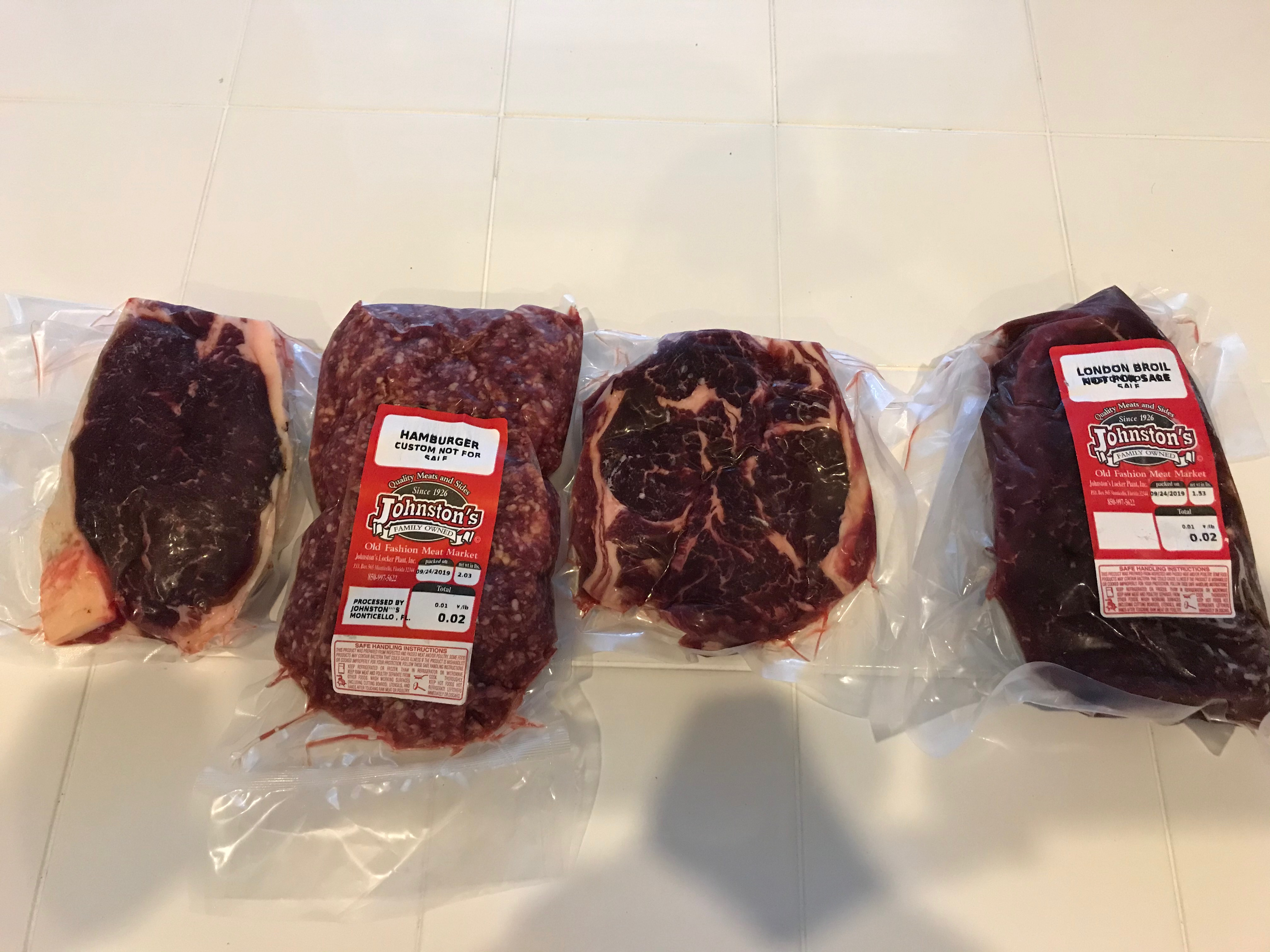
Once you decide you want beef from us, Johnston’s hangs it, ages it, and packs it. They dry-age 14 days, then cut it, vacuum-seal each portion, label it, and box it. Vacuum pack lasts a lot longer than butcher paper.
You pay Johnston’s for the processing. They call when it is ready. Please pick up within 5 days and get it in the freezer that day. If you do not pick it up in time, they will sell your portion to cover the cutting. They make every effort to reach you before that happens.
If you have no clue what to ask for, they will walk you through it. The cut sheet and charts are lower on this page.
From the farm
We had to increase our price to $9.00 a pound hanging weight. We are a small operation and we don’t want to expand too much. Our bull and cows are throwing some excellent bull and heifer prospects, so several calves that might have been beef are going as breeding stock instead. We let each calf show us. To be a breeder they have to check all the boxes, and that just doesn’t always happen. We will be adding another cow to the bull’s harem soon. He is looking forward to it.
What one side costs
A side is half a cow. Typical hanging weight is 165 to 190 lb. You pay the posted farm price on the day you reserve.
- Deposit to Apafia
- $105 per side When you reserve. This comes off the farm bill; it is not extra.
- Farm price
- $9.00 / lb hanging Balance due when we deliver the beef to Johnston’s.
- Typical farm bill
- $1,485 – $1,710 165 to 190 lb hanging × $9.00. Your $105 deposit is part of this.
- Johnston’s processing
- about $300 – $350 Paid to Johnston’s for aging, cutting, vacuum packing. Based on hanging weight and any extras.
- Typical total for one side
- about $1,785 – $2,060 Farm bill plus Johnston’s. Special cuts can add a little more.
We keep our farm price below USDA grass-fed market. Compare there if you like.
What to do next
Half a cow is one side of beef. Want the whole cow? Reserve both sides. A quarter is a split: one person reserves the side, and Johnston’s divides the cuts as evenly as they can.
-
Reserve a side
When a listing is open, you put $105 down for that side. We assign you that half and list the month we expect it to be ready. Sometimes we need more finish so the date moves out. If it does, we tell you.
-
Pay the farm when it hangs
We take the beef to Johnston’s Meat Market in Monticello, Florida. We call you with the hanging weight and send an invoice. You pay Apafia the rest of the $9.00 per pound.
-
Fill out the cut sheet
Make an appointment with Johnston’s to talk through the cuts. They know what they are doing. We recommend keeping the bone in. Look at the charts below, then open Johnston’s custom cut sheet.
Ask for the liver. It is excellent. If you don’t like liver, someone you know will. If you have dogs, ask for the tongue, heart, and scrap bones.
-
Pay Johnston’s, then pick up
They dry-age the beef 14 days, then cut it to your sheet, vacuum-seal each portion, label it, and pack it in freezer boxes. They call when it is ready. Please pick up within 5 days and get it in the freezer that day.
Beef listed now
These sides are already reserved or sold. Nothing is open to reserve right now.
 Reserved November 2026
42TA
Finishing
Reserved APAFIA
Reserved November 2026
42TB
Finishing
Reserved Marston/Lombardia
Reserved for October 2026
39WA
Finishing
Reserved DHurst
Reserved for October 2026
39WB
Finishing
Reserved CBradley
Sold
07 TE
Processed
Live Weight 625/2 = 312.5
Hanging Weight /2 = 182.5
L/H = 58.4%
Sold
07 TE
Processed
Live Weight 625/2 = 312.5
Hanging Weight 365 /2 = 182.5
L/H = 58.4%
An example of our beef
Both sides
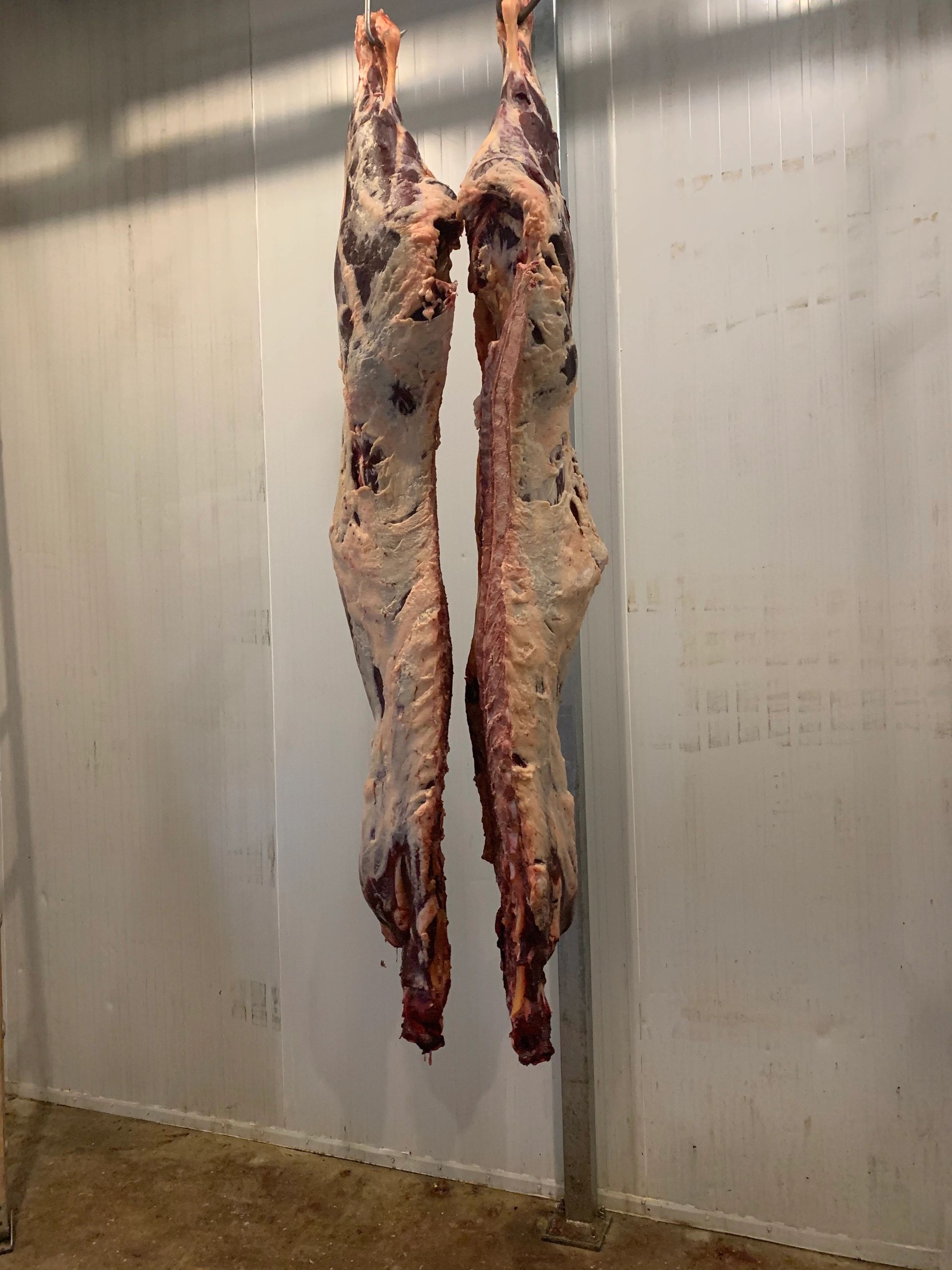
Notice the good layer of fat. This is both sides of a typical cow we take for processing.
This cow weighed out at 358 lb, or 175 lb per side.
Larger cows will weigh out nearly twice this amount. That costs more per side, and you will need a lot more room in the freezer.
Good layer of fat
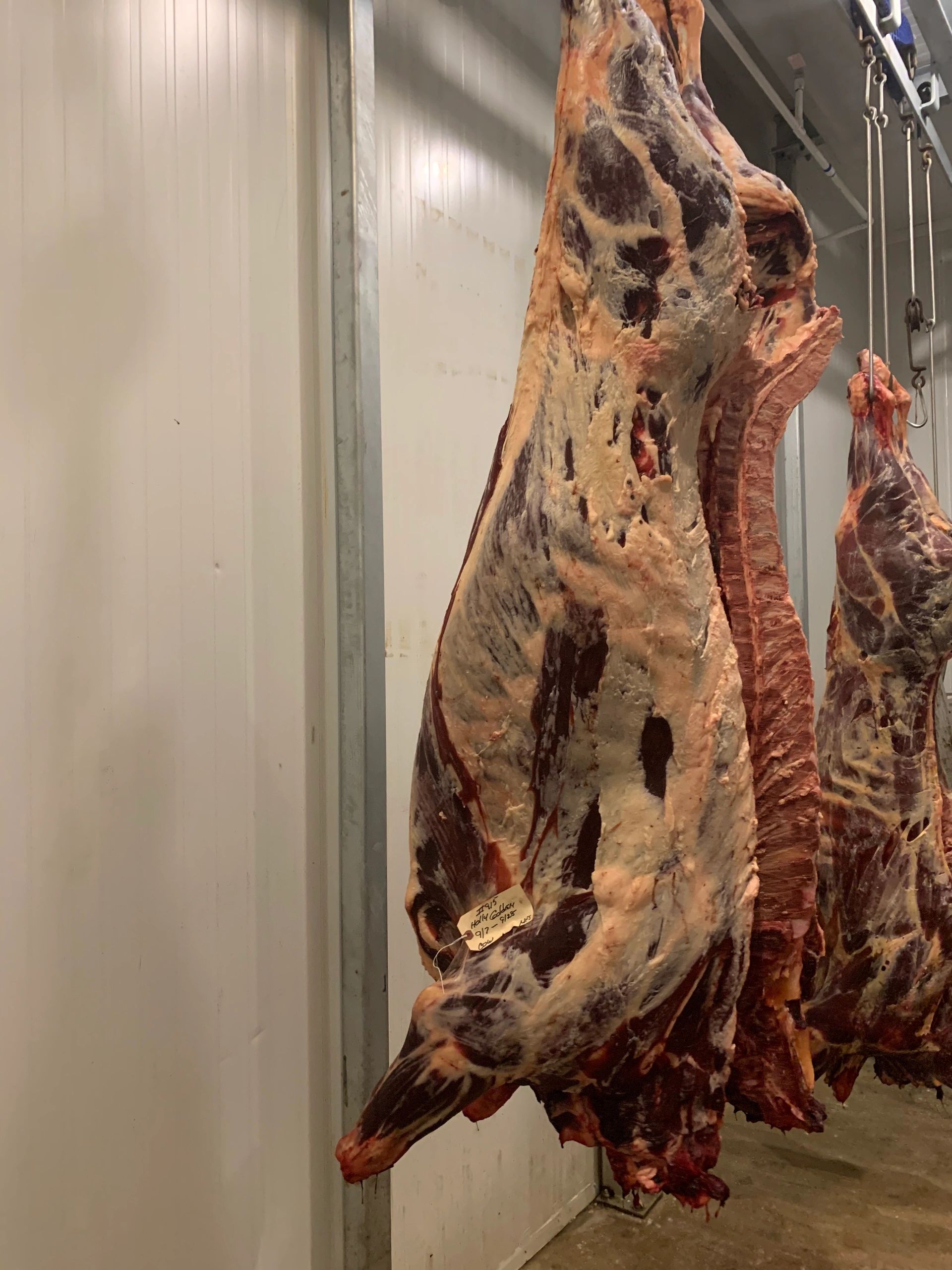
Most of the fat you see here will be trimmed off, but it matters. Fat on the carcass means marbling in the steaks and hamburger, and that is flavor.
Good looking beef
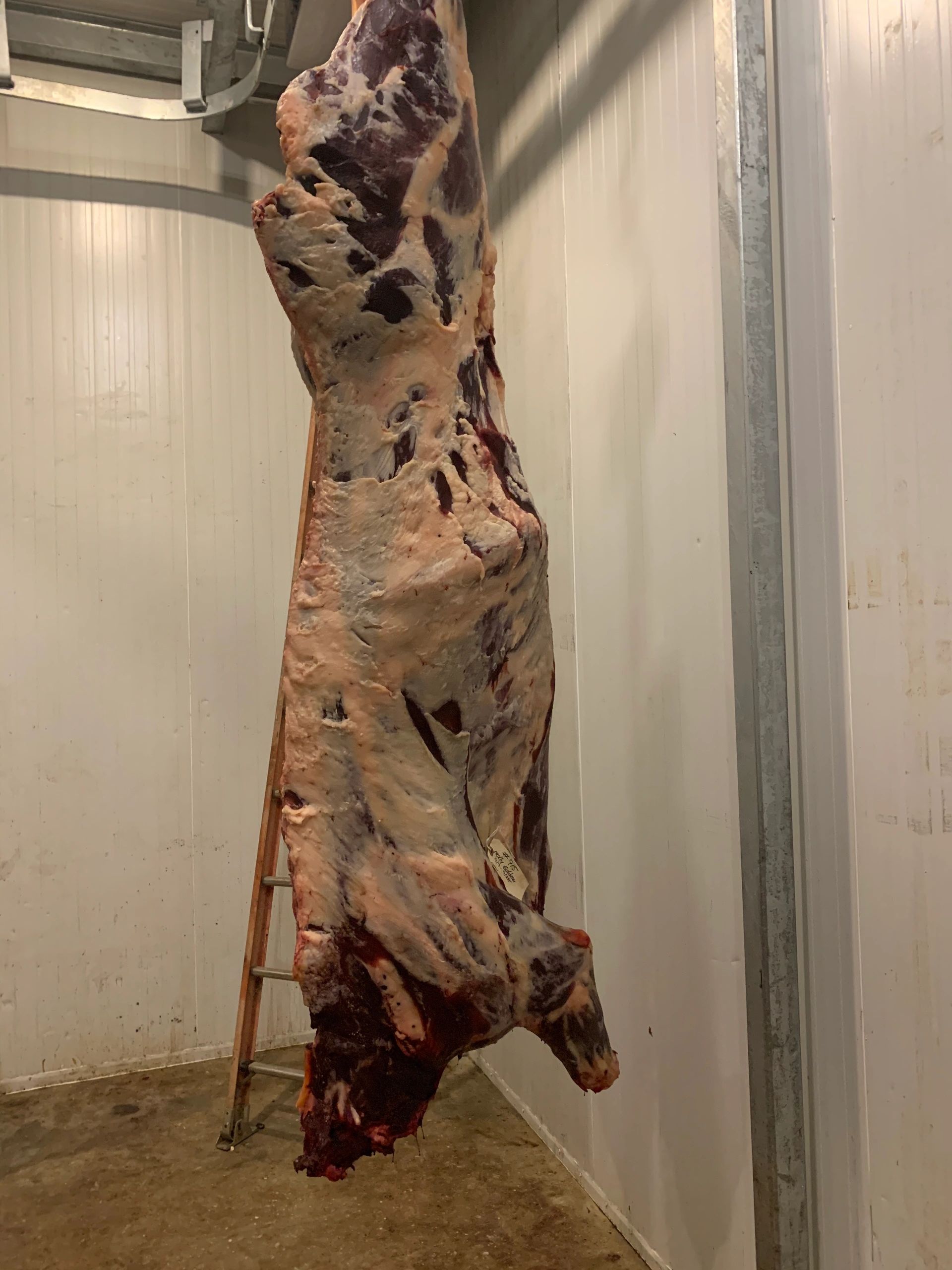
Go ahead, tap and zoom in. This cow had plenty of food and exercise. This is quality beef.
Not our beef
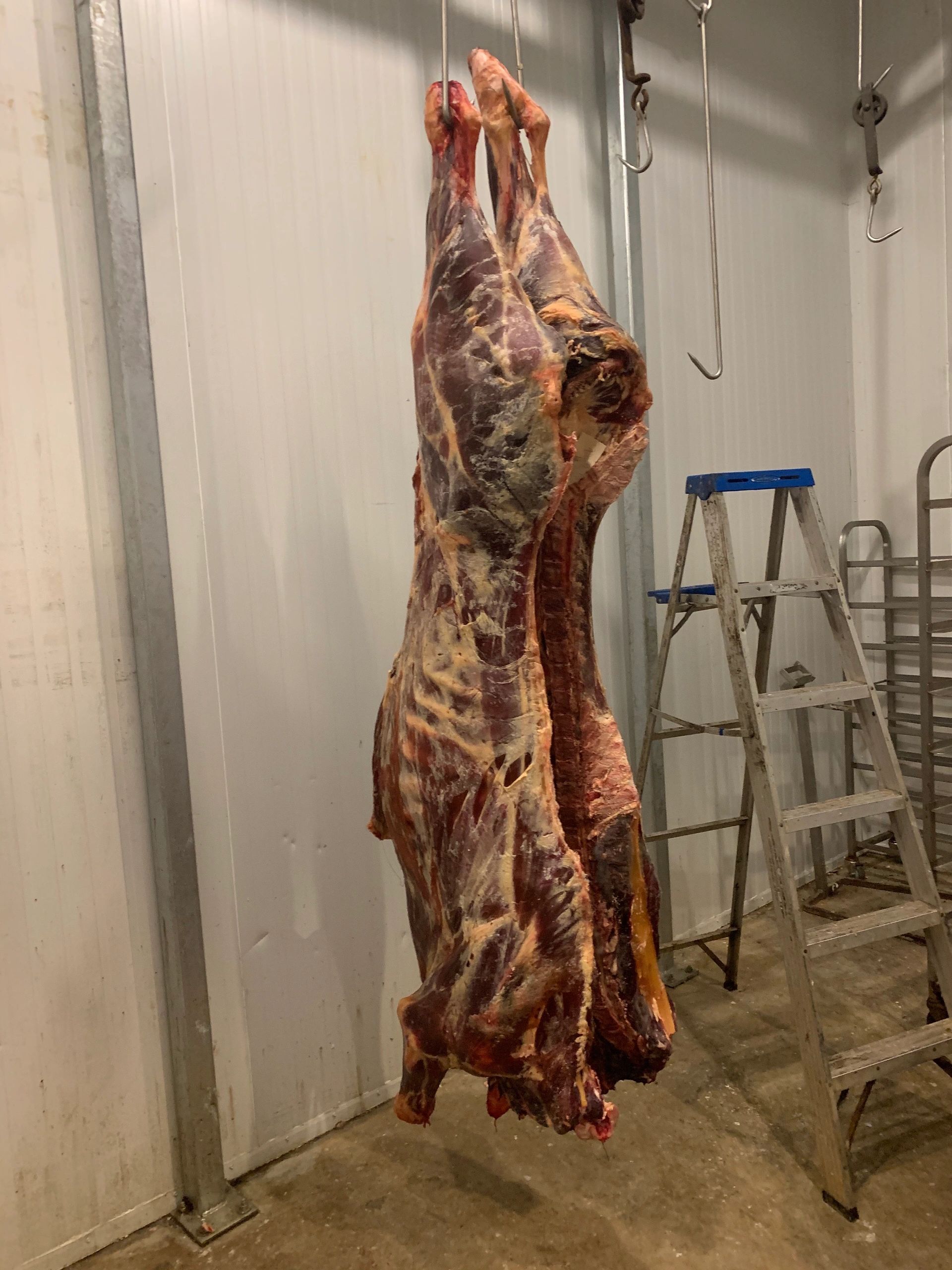
This one was hanging in the same cooler. It is not ours. Even though it is a bigger cow, there is much less fat and not enough muscle.
Vacuum sealed packages
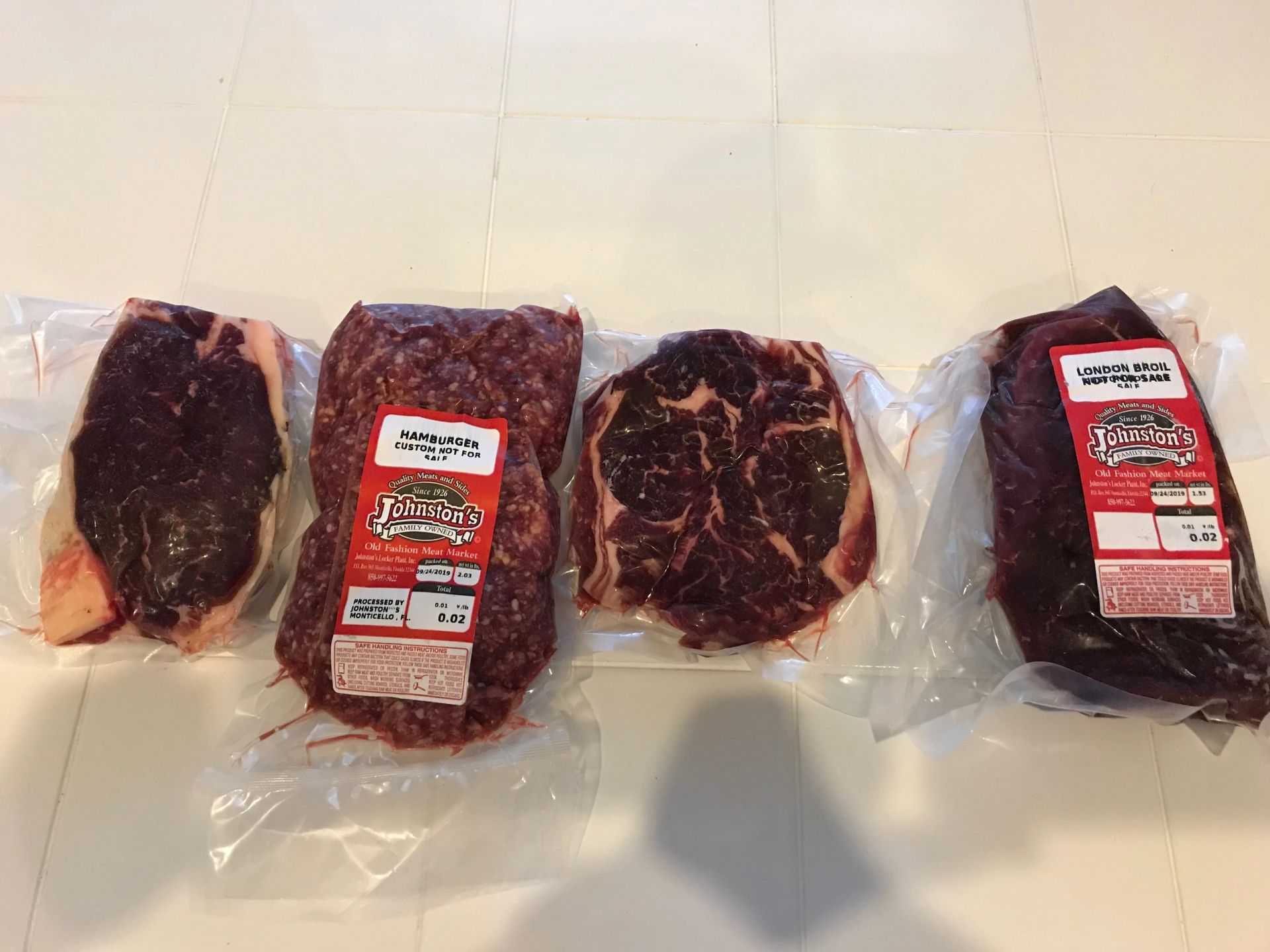
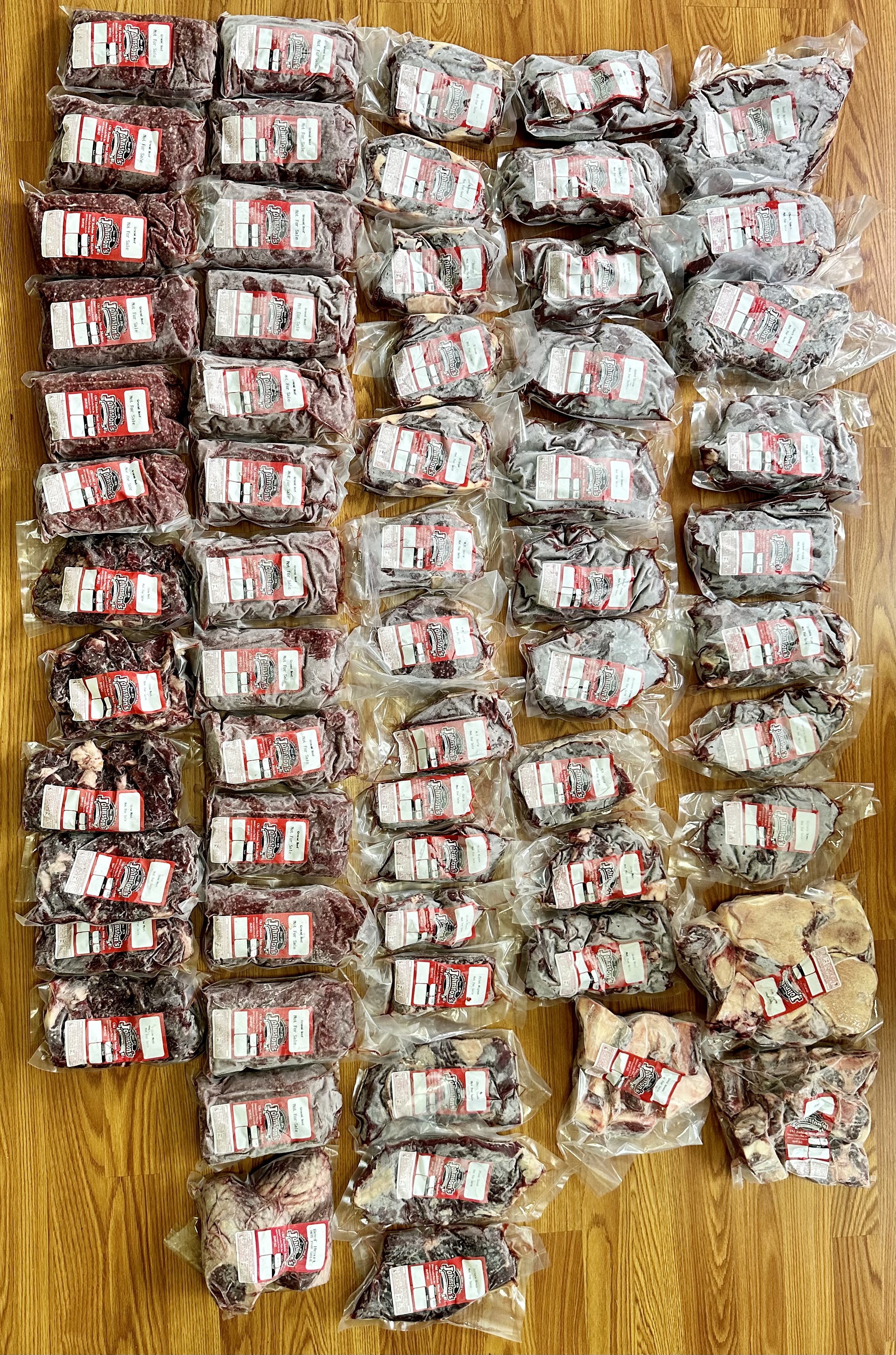
This is how your meat is packed. Vacuum sealed lasts a lot longer than butcher paper. Each pack is labeled for cut and weight.
Ready to go home
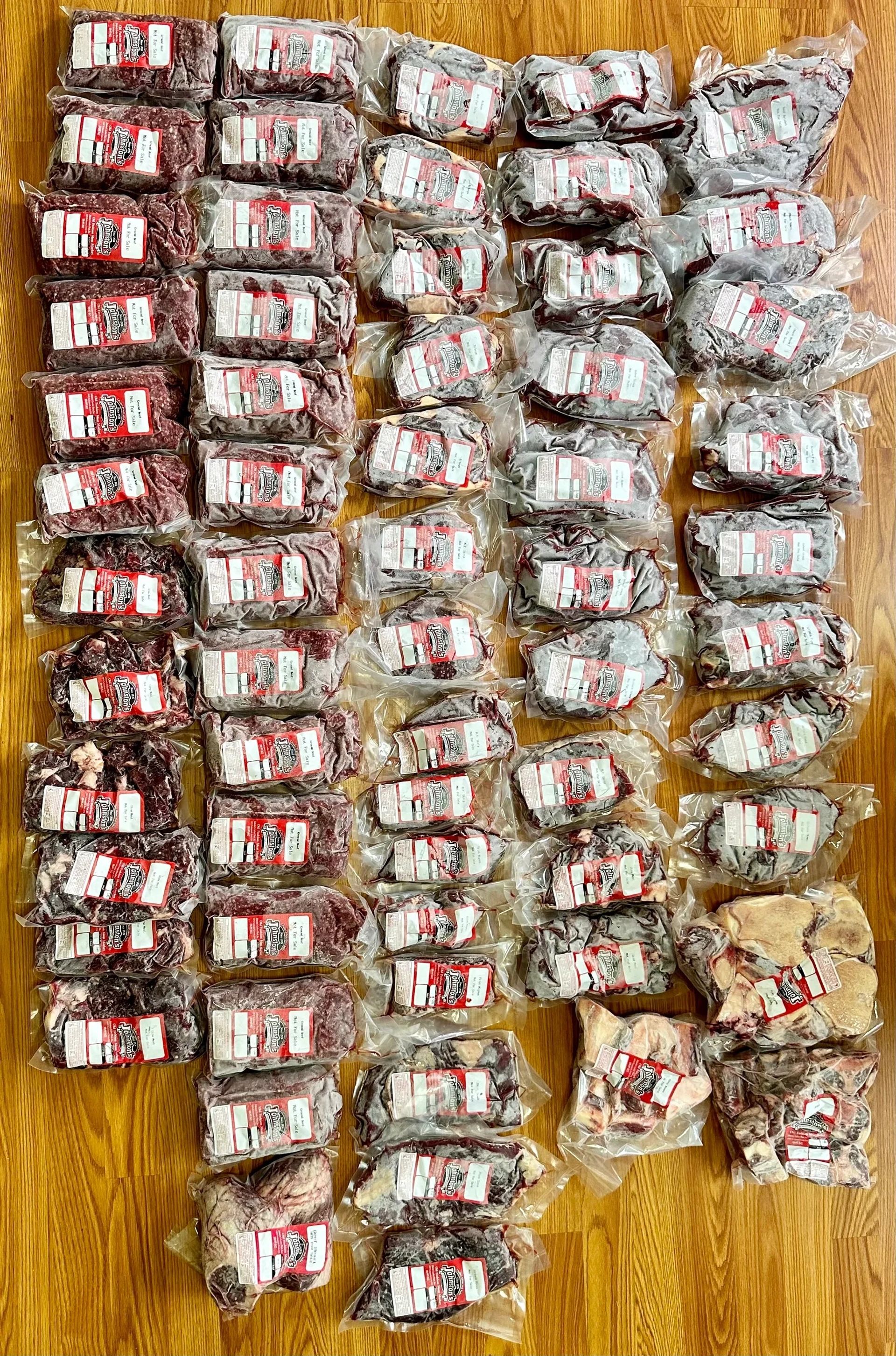
This is what you take home from half a cow — one side of beef.
Downloads
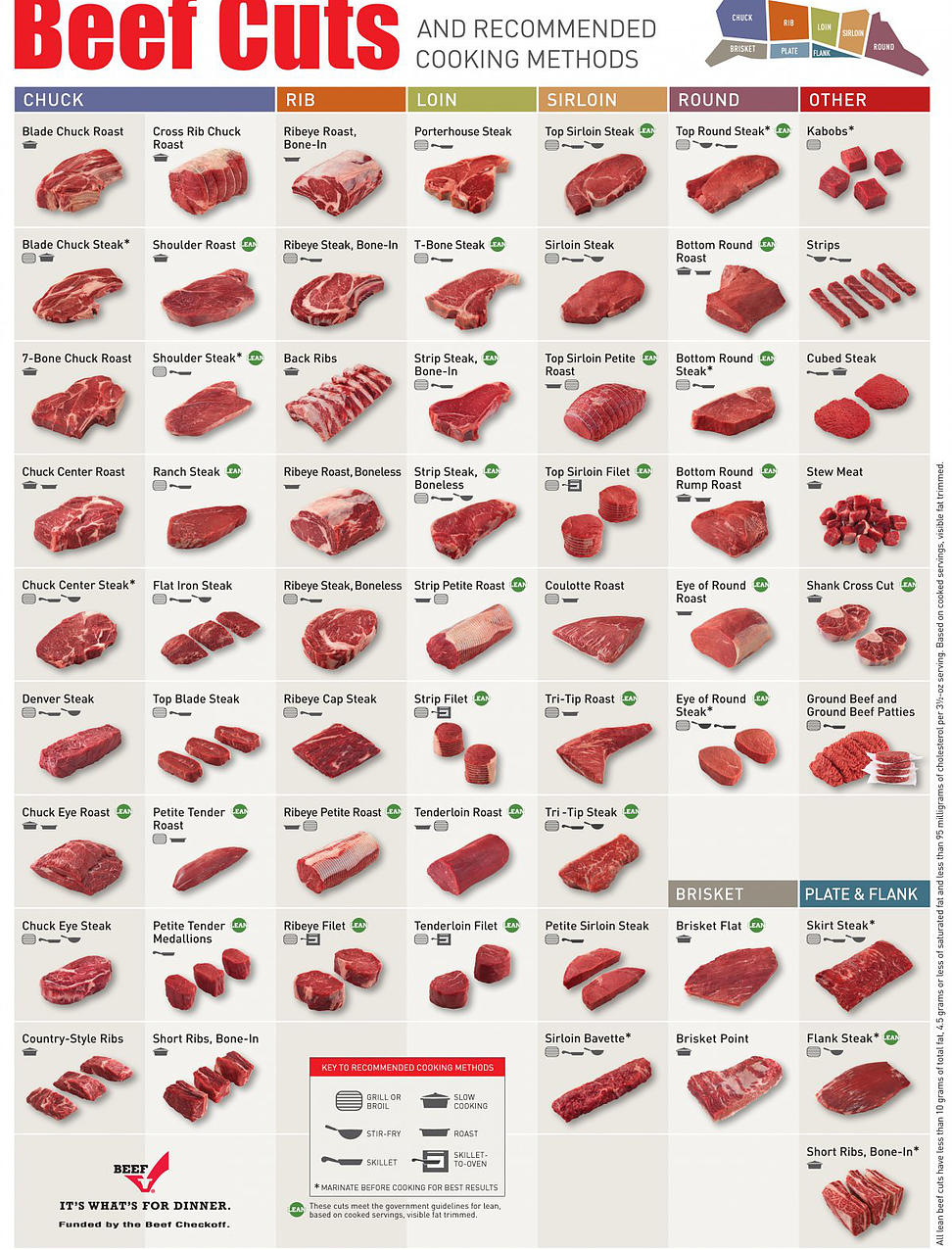
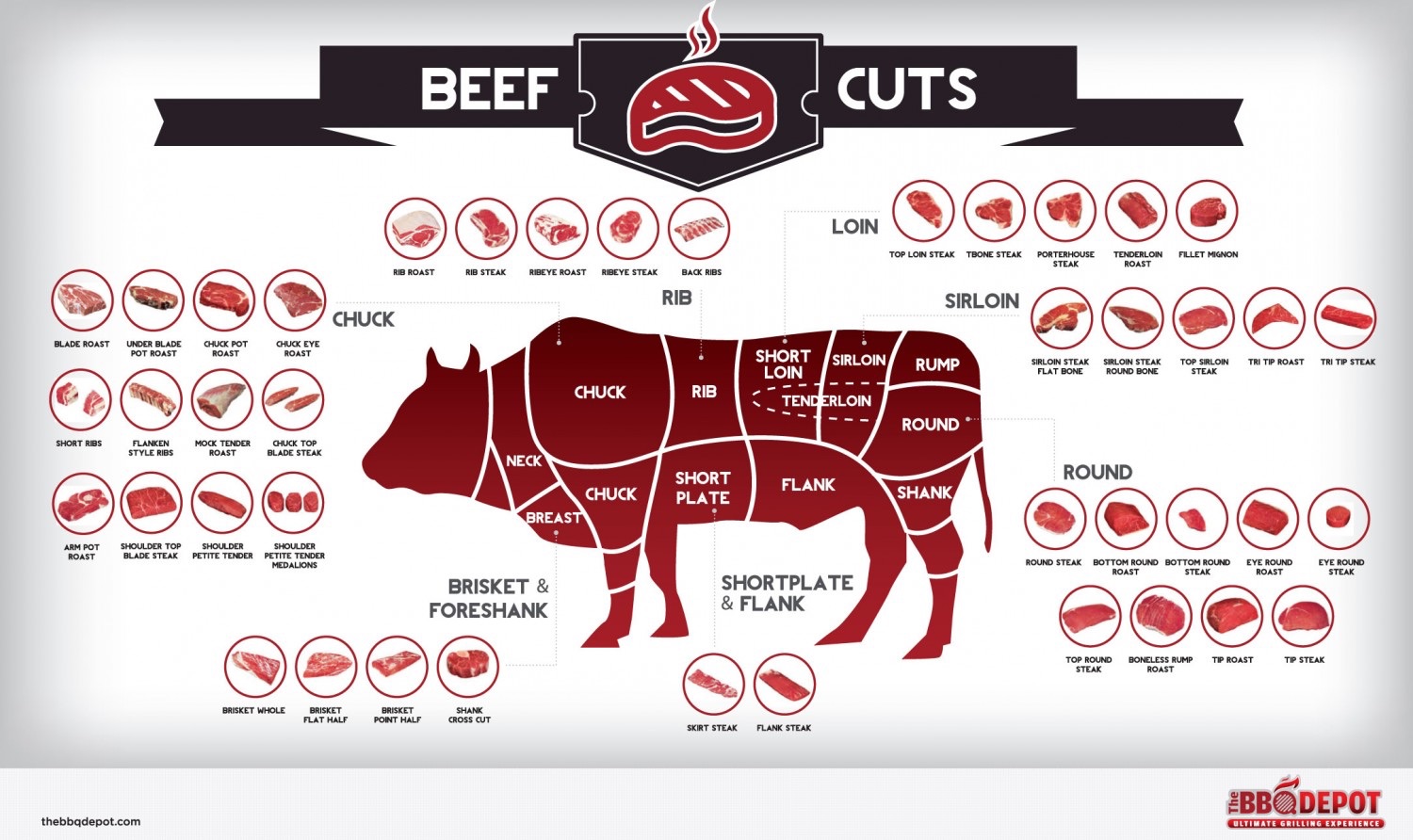
Our meat (jpg) Half-cow take-home packages (jpeg) Johnston’s Meat Market Johnston’s cut sheet (pdf)